Billie Eilish’s Grammys speech fuels a new weekend wave of backlash and support
Billie Eilish’s Grammys speech fuels a new weekend wave of backlash and support
One week after winning Song of the Year, Billie Eilish remains at the center of a cultural flashpoint. As of Sunday, February 8, 2026 (ET), fresh critiques and defenses of her February 1 acceptance speech kept momentum online and on air, turning an awards-night message into a sustained national debate over immigration, Indigenous land rights and the role of pop stars as political voices.
Fresh flashpoint on Saturday
On Saturday, February 7 (ET), a high-profile late-night host blasted Eilish’s Grammys remarks, framing her comments as naïve and performative. The monologue zeroed in on her declaration that “no one is illegal on stolen land” and her explicit condemnation of immigration enforcement. The segment, clipped and shared widely, reignited arguments about whether awards-show stages should be used for political statements, and whether complex policy issues are well served by sound bites. The host’s broader point—insisting that “knowledge matters” in celebrity advocacy—became its own lightning rod, with detractors calling the critique dismissive and supporters saying it asked for substance over slogans.
Influencer critique draws swift pushback
Over the same weekend window, an online provocateur attempted to drag Eilish for the speech and for invoking historical land dispossession, only to find the tables turned as commenters piled on. The exchange underscored a familiar dynamic: celebrity activism prompting influencer counterprogramming, then a rapid backlash to the backlash. Within that churn, Eilish’s brother and collaborator Finneas surfaced as a rare steadying voice, signaling support and pushing back on harassment aimed at his sister. The volleys made clear that the post-Grammys discourse has moved well beyond a single quote and into a referendum on tone, tactics and the burdens placed on artists who wade into politics.
What Eilish said on February 1
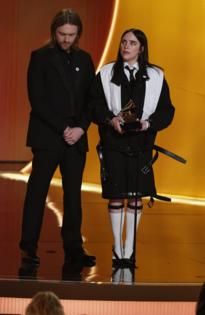
At the 2026 ceremony on Sunday, February 1 (ET), Eilish accepted Song of the Year for “Wildflower” and used the mic to elevate immigrant-rights messaging, punctuating her remarks with a bleeped expletive aimed at federal enforcement. She and Finneas, who co-wrote the track, also wore pins echoing the night’s broader protest theme. The reaction in the room was a mix of applause and visible approval, an atmosphere that helped propel the speech far beyond music circles in the days that followed. For supporters, it read as a clear moral stance. For critics, it set up a litmus test: could a brief, emotionally charged moment at a gala responsibly carry the weight of complicated historical and policy claims?
Award milestone meets political spotlight
Eilish’s win marked her 10th career Grammy, an achievement that would typically dominate headlines on its own. Instead, the political dimensions of the speech and her swift move from performance to polemic ensured that “Wildflower” shared oxygen with a broader debate about celebrity activism. Industry peers and fans praised her for conviction and consistency, noting that she has built a track record of speaking on social justice and environmental issues. Others argued that the awards stage, watched by millions, carries a responsibility to pair moral clarity with concrete pathways for change—donation links, voter-registration pushes, or partnerships with advocacy groups—so that the energy of a viral moment translates into action the next morning.
Why the weekend reactions matter
The weekend’s critiques and counters show that Eilish’s speech has outlasted the typical news cycle for awards-night sound bites. The focus on accuracy, context, and the scope of claims reflects a wider public appetite for more rigorous conversations about immigration and Indigenous history—conversations that do not always fit cleanly into a 30-second acceptance speech. At the same time, the intensity of the defense from fans and fellow artists reveals a parallel demand: that star power be used to spotlight harm, even if the messaging is blunt. The friction between those expectations is driving the sustained attention now—well past the confetti—and will likely resurface the next time a major pop figure steps to a podium with something more than thanks to say.
What to watch next
As of Sunday, February 8 (ET), there is no fresh formal statement from Eilish expanding or clarifying the remarks beyond what was said onstage. Whether she chooses to double down, elaborate with specifics, or shift the spotlight to policy partners will shape where this narrative goes from here. With the news cycle still running hot a week later, the next move—another public appearance, a detailed post, or a measurable call to action—could determine whether the conversation evolves into concrete initiatives or remains a polarized tug-of-war over tone.
Sources consulted: ArcaMax Publishing, New York Post, Times of India, IndiaTimes